Korean Air lost 16 aircraft and found the problem was in the cockpit
 By Leo Paulo · About me
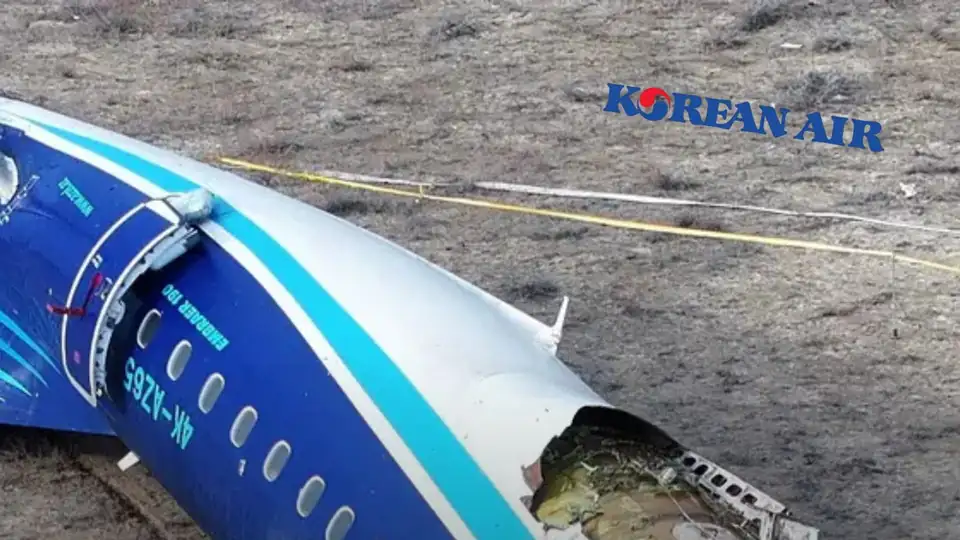
Between 1970 and 1999, Korean Air lost 16 aircraft. Then it changed how the cockpit worked and brought in outside help. The model: bring in outside help when the problem is in how the team works.
Five pieces, four minutes. This issue is about what happens when whoever decides alone has nobody to cross-check them.
The airline that lost 16 aircraft and went to look at the cockpit
On 6 August 1997, a Korean Air Boeing 747 crashed in Guam...
Less than two years later, another of the airline's aircraft crashed and its foreign partners cut the ties.
Korean Air is South Korea's flag carrier. According to Wikipedia, between 1970 and 1999 it lost 16 aircraft in serious accidents and incidents, with more than 700 deaths. In Guam, 228 or 229 people died, depending on the source. The US investigation (NTSB) named as the probable cause that the captain did not brief and carry out the approach properly and that the first officer and the flight engineer did not monitor or cross-check what he was doing. Among the contributing factors were the captain's fatigue and the airline's inadequate crew training.
Now, what they did with that.
In April 1999 one of the airline's cargo aircraft crashed near Shanghai. The founder, Cho Choong-hoon, stepped down as chairman, taking full responsibility for the accidents, and his son, Cho Yang-ho, took his place. Twenty-nine senior executives offered their resignations, but the airline did not accept them and reshuffled instead. Delta, Air Canada and Air France stopped sharing flights with Korean Air. South Korea's president, Kim Dae-jung, called the airline's record a national embarrassment, and a team of Delta safety consultants went to work with it from the end of May.
But the best part comes later.
The criticism from outside pointed to a very hierarchical cockpit culture. FlightGlobal reports that former air force pilots were criticised for bringing into the cockpit a seniority nobody challenged and for finding it hard to delegate to first officers. The airline defended its crews and denied part of this. Even so, it changed training and management, brought in Delta and Boeing consultants, adopted American crew rest rules and started training in Boeing and Airbus simulators, according to ABC. Wikipedia says its safety rating was restored after the airline invested billions in safety, fleet and technology.
Korean Air absorbs Asiana on 17 December
On 12 December 2024, Korean Air completed the purchase of 63.88% of Asiana. On 13 May 2026, the boards of the two airlines approved the merger and the contract was signed on the 14th. The integrated Korean Air starts on 17 December 2026.
The transport ministry approved the merger on 25 June, on the condition that Korean Air guarantees aviation safety and passenger convenience. Who wins, according to the airline, is the airline itself, which ends up with one flag carrier and one operating certificate. Asiana stops existing as a separate airline. A 2022 agreement with the Fair Trade Commission stops Korean Air from raising fares above inflation for ten years, according to Korea Daily. What I do not know yet is what happens to the miles: in May, the plan was still under discussion. What comes next is moving Asiana's aircraft and safety systems to Korean Air's rules.
Outside help
When the problem is in how the team works, bring in someone who has already solved it elsewhere.
After Shanghai, a team of Delta safety consultants went to work with Korean Air. Wikipedia also mentions Boeing consultants. The airline also adopted American crew rest rules and started training in Boeing and Airbus simulators, according to ABC.
How many aircraft it lost between 1970 and 1999
16: Wikipedia counts 16 aircraft lost in serious accidents and incidents between 1970 and 1999, with more than 700 deaths. In Guam, the US investigation added the captain's error to the lack of monitoring by the first officer and the flight engineer.
In a business of any size, the people next to whoever decides must be able to say they are wrong.
- If you run a large company or a multinational. Before every big decision, ask two people from different areas to write down what looks wrong in it. Read everything before you decide.
- If you have an SME. Agree on a phrase that anyone on the team can use to stop a decision, like 'I need to say something'. And make sure nobody who uses it is ever punished.
- If you are a startup founder or work for yourself. Choose someone you trust and give them permission to contradict you before every big decision, like prices, hiring and contracts.
- If you have a small local business, like a bakery or a shop. Ask your youngest employee what they would change in the shop this week. Listen to the end and change one thing.
When nobody can say you are wrong, the mistake goes with you to the end.
In Guam, the US investigation pointed to the captain's error and to the lack of monitoring and cross-checking by the first officer and the flight engineer. That is what is confirmed.
What outside critics pointed to, a very hierarchical cockpit, is an explanation and not a finding of the investigation, and the airline denied part of it. So it helps to break the problem into pieces you can measure: who decides, who cross-checks and what happens when someone disagrees.
If you started from scratch, you would not waste time arguing about who is right. You would build a place where disagreeing is normal, with an agreed phrase and outside help, as Korean Air did with Delta.
Whoever is in charge needs at least one person who tells them they are wrong.
This week's action. Write down the name of someone who contradicts you without fear and ask for their opinion before your next big decision. To know whether it worked, count how many times, in the next meetings, someone disagrees with you out loud.
The mice and the bell
In Aesop's fables, the mice meet in council to decide how to escape the cat, everyone's enemy. One of them proposes hanging a bell round the cat's neck, so they can hear it coming. The idea is applauded, until an old mouse asks who is going to put the bell on the cat. The mice look at one another and nobody speaks. The old mouse concludes that it is easy to propose impossible remedies.
- They proposedThe mice decided to hang a bell on the cat.
- They applaudedEveryone liked the idea.
- They went quietWhen the old mouse asked who would do it, nobody spoke.
This week's action. Pick a rule in your company that everyone knows is wrong and decide who will tell the boss, and when, this week.
Source: Aesop, Belling the Cat, in Aesop's Fables, Lit2Go (University of South Florida)
To take away
- To send
- I want you to tell me plainly when you think I am deciding badly. From the next meeting on, anyone with a doubt says 'I have a doubt' and I stop to listen. You can be the first person to use it.
Copy, adjust and send it to your team or to the person you want to contradict you.
P.S. Who on your team tells you that you are wrong without fear? Reply to this email or write to [email protected]. I read every reply. And tell me if this issue was useful: a yes or a no is enough.
Tell me what you thought
It is anonymous, one rating per person, and it helps me decide what to keep and what to cut.
Get the next issue in your inbox.
Who writes it
Leo Paulo. I am co-CEO of Bitalk, the biggest ecosystem of entrepreneurship and business content in Portugal. "I tell the best business stories in the world.
Sources
- FAA: Lessons Learned, Korean Air Flight 801 (HL7468)
- FlightGlobal: Safety first
- FlightGlobal: Humbled Korean Air stages management upheaval
- FlightGlobal: Korean settles for reshuffle instead of resignations
- ABC News: Korean Air upgrades service, image
- Wikipédia: Korean Air
- The Korea Times: Korean Air to launch integrated airline in December 2026
- The Korea Herald: aprovação da integração com a Asiana
- eGlobal Travel Media: Korean Air set for integrated airline launch in 2026
- Runway Girl Network: comunicado da Korean Air
- Korea Daily: Unified Korean Air to launch Dec 17
- Lit2Go: Esopo, Belling the Cat
Frequently asked questions
What happened on Korean Air Flight 801?
On 6 August 1997, a Boeing 747 crashed in Guam. Depending on the source, 228 or 229 people died. The US investigation pointed to failures by the captain and a lack of monitoring by the first officer and the flight engineer, with the captain's fatigue and the airline's inadequate crew training as contributing factors.
How many aircraft did Korean Air lose?
According to Wikipedia, 16 between 1970 and 1999, with more than 700 deaths.
What changed afterwards?
A team of Delta safety consultants went to work with the airline in 1999. Korean Air also brought in Boeing consultants and adopted American crew rest rules, according to ABC. Wikipedia says its safety rating was restored.
What happens to Asiana?
The integrated Korean Air starts on 17 December 2026, with Asiana absorbed. The transport ministry approved the merger with conditions on aviation safety and passenger convenience.
More issues
- 10He was supported by his wife while failing 5,126 times before getting it rightJames Dyson made 5,127 prototypes of a vacuum cleaner, partly supported by his wife. In 2025, Dyson sold 6.13 billion pounds. The model: test until you get it right. · 4 min read
- 09The state nationalised his group in 1975. He restarted in Brazil and left 500 million to researchIn 1975, António Champalimaud's group was nationalised. He restarted in Brazil and came back in 1992. The model: restart elsewhere and come back when the door opens. · 4 min read
- 07The events company stopped. They made ice cream and reached TexasIn 2020, two 21-year-old friends saw their events company hit. Today Swee sells vegan ice cream in Portugal and the US. The model: one door at a time. · 4 min read