The state nationalised his group in 1975. He restarted in Brazil and left 500 million to research
 By Leo Paulo · About me
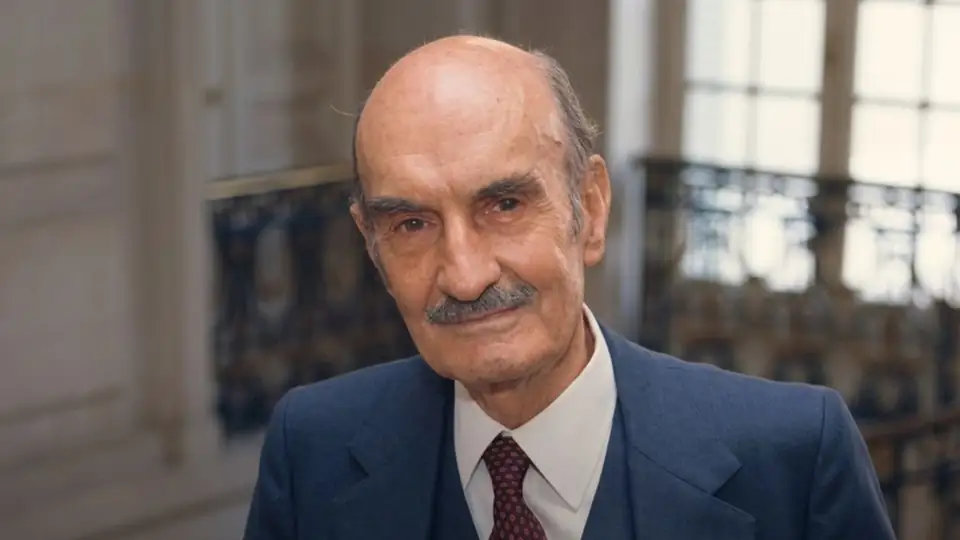
His group was nationalised in 1975. He restarted in Brazil, came back in 1992 and left about 500 million euros to research. The model: restart somewhere else and come back when the door opens.
Five pieces, four minutes. This issue is about what you do on the day you lose your main business, and what you could have prepared beforehand.
The businessman whose group the state nationalised
On 11 March 1975, António Champalimaud was in Paris when he was told the state was going to nationalise the steel industry...
Seventeen years later, he came back to Portugal and began to recover part of what he had lost.
António de Sommer Champalimaud was born in Lisbon on 19 March 1918. In 1937, his father died and left the businesses in a difficult situation: he left university and committed to sorting them out. He did business in Angola and Mozambique, became the largest shareholder of Banco Pinto & Sotto Mayor, bought Confiança and took a stake in Mundial. In 1975, the group was nationalised.
Now, what he did with that.
He went to Brazil, where he was building a cement factory. He bought a farm and took up farming and cattle. According to DN, the first reason was to feed the family if the factory did not succeed. Infopedia says he rebuilt his wealth through farming, cattle and cement.
But the best part comes later.
In 1992 he came back to Portugal for the privatisations and bought 51% of Mundial Confiança. In 1994 he held 80% of Banco Pinto & Sotto Mayor and bought 50% of Banco Totta & Açores through Crédito Predial, according to Biografías y Vidas. He died in Lisbon on 8 May 2004. His will surprised the family: it created a foundation for scientific research in medicine. According to Forbes Portugal, he left about 500 million euros to the Champalimaud Foundation, devoted to biomedical research, mainly on cancer.
The Champalimaud Foundation joined a 25 million dollar prize against cancer
On 4 March 2026, the InteroCANCEption consortium, which includes researcher Henrique Veiga-Fernandes of the Champalimaud Foundation, was chosen by the Cancer Grand Challenges initiative to receive up to 25 million dollars over about five years. The money comes from Cancer Research UK and the US National Cancer Institute. The Champalimaud Foundation was born from António Champalimaud's will.
The project studies how the brain detects and reacts to tumours. Who wins, according to the Foundation, is Portuguese research: it is the first time this prize goes to a Portuguese institution. The consortium's work started on 1 May 2026, according to The Portugal Post. I have not found results yet, and I do not know when they will appear. Who loses, I do not know.
Restart outside, come back later
When you lose your business in one place, restart in another and come back when there is an opening.
In 1975 he went to Brazil, where he was already building a cement factory, and bought a farm. According to DN, the first reason was to feed the family if the factory did not succeed. In 1992 he came back to Portugal for the privatisations and bought 51% of Mundial Confiança.
What he left to the Foundation
€500M: About 500 million euros, according to Forbes Portugal, for the Champalimaud Foundation, devoted to biomedical research, mainly on cancer. According to DN, the creation of the foundation surprised the family when the will was opened, three days after his death.
In a business of any size, having a second place to restart protects you from losing everything at once.
- If you run a large company or a multinational. Identify the market or customer that weighs most in your revenue and write down what you would do if you lost it tomorrow. Keep that plan.
- If you have an SME. Choose a second source of revenue and give it a small part of the budget this quarter, so you have somewhere to restart if the main one fails.
- If you are a startup founder or work for yourself. Always keep a second activity or a second customer running in parallel, even a small one, so you do not depend on a single door.
- If you have a small local business, like a bakery or a shop. If you only sell in your neighbourhood, test an online sale or a fair this month, so you have a second place to sell.
When you lose the business, what you know how to do stays with you.
What is confirmed: in 1975 the group was nationalised and he went to Brazil, where he was already building a cement factory.
What is not confirmed, and so stays out, is that he became richer in Brazil. What is known, according to DN, is that he bought a farm to feed the family if the factory failed: a second door, planned in case the first one failed.
If you started from scratch, you would not wait for a crisis to open the second door. Seventeen years later, he came back to Portugal and began to recover part of what he had lost.
When they take your company, what you know how to do did not stay behind.
This week's action. Write down three things you do well that do not depend on your job title, your company or your current market. To know whether your plan B is real, see if you can sell one of them to someone outside your usual market.
The miser and the buried gold
In Aesop's fables, a miser buries his gold and goes to look at the spot every day. One day, someone finds the hiding place and steals the gold. The miser tears his hair in despair. A neighbour advises him to bury a stone in the same hole and imagine it is the gold, because the gold never did him any good.
- He buriedThe miser hid the gold and only went to look at it.
- He lostSomeone found the hiding place and took everything.
- He never used itThe neighbour said the stone would do just as well, because the gold had never done him any good.
This week's action. Pick an idle resource in your business, such as money, time or contacts, and decide this week how to put it to work.
Source: Aesop, The Miser, in Aesop's Fables (translated by George Fyler Townsend), Sacred Texts
To take away
- To send
- I am restarting in another market and I want to learn from someone who is already there. I would like twenty minutes of your time this week to hear what works there. Tell me when suits you.
Copy, adjust and send it to someone who is already in the market you want to go to.
P.S. If you lost your biggest customer tomorrow, where would you restart? Reply to this email or write to [email protected]. I read every reply. And tell me if this issue was useful: a yes or a no is enough.
Tell me what you thought
It is anonymous, one rating per person, and it helps me decide what to keep and what to cut.
Get the next issue in your inbox.
Who writes it
Leo Paulo. I am co-CEO of Bitalk, the biggest ecosystem of entrepreneurship and business content in Portugal. "I tell the best business stories in the world.
Sources
- DN: De Portugal ao México e ao Brasil
- DN: O homem que teve várias vidas
- Infopédia: António Champalimaud
- Biografías y Vidas: António Champalimaud
- Forbes Portugal: Manuel Champalimaud, os negócios do filho de António Champalimaud
- Wikipédia: António Champalimaud
- Fundação Champalimaud: Can the brain sense cancer?
- Correio da Manhã: Cientistas portugueses investigam como o cérebro pode travar o cancro
- Observador: equipa integrada por português vai investigar o cérebro
- The Portugal Post: Champalimaud Foundation and the InteroCANCEption project
- Sacred Texts: Esopo, The Miser
Frequently asked questions
Who was António Champalimaud?
A Portuguese businessman, born in Lisbon on 19 March 1918 and died in Lisbon on 8 May 2004. His name was tied to Banco Pinto & Sotto Mayor and to the insurers Confiança and Mundial, before his assets were nationalised in 1975.
What happened in 1975?
His group was nationalised. In March 1975, he was in Paris when he was told that the nationalisation of the steel industry was imminent, and his personal assets were frozen. He went to Brazil, where he was building a cement factory.
Did he own banks again?
In 1992 he came back for the privatisations and bought 51% of Mundial Confiança. In 1994 he held 80% of Banco Pinto & Sotto Mayor and bought 50% of Banco Totta & Açores through Crédito Predial, according to Biografías y Vidas. Pinto & Sotto Mayor had been his before 1975.
How much did he leave to the Foundation?
About 500 million euros, according to Forbes Portugal, for a biomedical research foundation, mainly on cancer, chaired by Leonor Beleza.
More issues
- 10He was supported by his wife while failing 5,126 times before getting it rightJames Dyson made 5,127 prototypes of a vacuum cleaner, partly supported by his wife. In 2025, Dyson sold 6.13 billion pounds. The model: test until you get it right. · 4 min read
- 08Korean Air lost 16 aircraft and found the problem was in the cockpitBetween 1970 and 1999, Korean Air lost 16 aircraft. After Guam and Shanghai, it went to work on training and cockpit culture. The model: outside help. · 4 min read
- 07The events company stopped. They made ice cream and reached TexasIn 2020, two 21-year-old friends saw their events company hit. Today Swee sells vegan ice cream in Portugal and the US. The model: one door at a time. · 4 min read